
















Bybit or Kraken for a trader who actually lives in Palau?
The June–July 2026 Glory League terms are useful because they name verified Palau residents and derivatives tasks together. They establish a past country/product offer, not ongoing campaign rewards. The reviewed restriction policy supplies the separate current country check.
That makes Bybit the first platform to assess for a conventional crypto-funded perpetual account. It is stronger evidence than a generic “buy Bitcoin in Palau” page. It still does not prove that every identity document, collateral asset or contract is approved for every applicant, and it does not establish a Palauan derivatives licence.
Kraken is the alternative when its international derivatives setup fits the assets you hold. Palau is not named in Kraken’s reviewed international derivatives exclusions. Its contract specifications and collateral system differ from Bybit’s, so it is worth comparing the relevant market rather than opening two accounts simply because both appear in a list.
| Exchange | Evidence relevant to Palau | Best reason to consider it |
|---|---|---|
| Bybit | A 2026 country-specific campaign included Palau residents and derivatives tasks; Palau is absent from the general exclusions reviewed. | USDT or USDC contracts in an exchange account, subject to the verified product entitlement. |
| Kraken | Palau is not named in the international derivatives exclusion policy. | An alternative international derivatives account with contract-specific leverage and multiple accepted collateral assets. |
| MEXC | Palau is absent from the general exclusions, but expressly restricted for the Futures Innovation Zone. | Only assess eligible ordinary futures markets; do not assume newly listed Innovation Zone contracts are usable. |
How much leverage is actually relevant?
Kraken’s published international specifications include BTC perpetual classes reaching 100x, with limits depending on the contract and position size. Bybit’s separate contract families should likewise be compared at the market and account level. A rate on a global landing page is not a national Palau limit or an assurance that the same multiplier works for every altcoin.
For an existing Bitcoin holder, the choice also depends on whether you want the collateral itself to remain exposed to BTC. A USDT-settled trade and a coin-settled trade can have different account outcomes even when the underlying market direction is the same. This is a useful product distinction; Palau’s use of US dollars does not make every crypto contract dollar-cash collateral.
Does a Palau digital ID unlock crypto futures?
The digital-residency programme issues a government-backed identity document. It does not turn a person living abroad into a physical resident of Palau, and RNS expressly says the ID is not proof of citizenship. For exchange access, the difference is decisive: a document can help establish identity without changing the restrictions that follow the holder’s actual location or residence.
Palau’s Digital Residency Office confirms RNS.ID as its authorised provider. That is useful for identifying the official programme. It does not mean the office has approved a particular exchange, that the exchange accepts every version of the card, or that a card purchase provides a futures account.
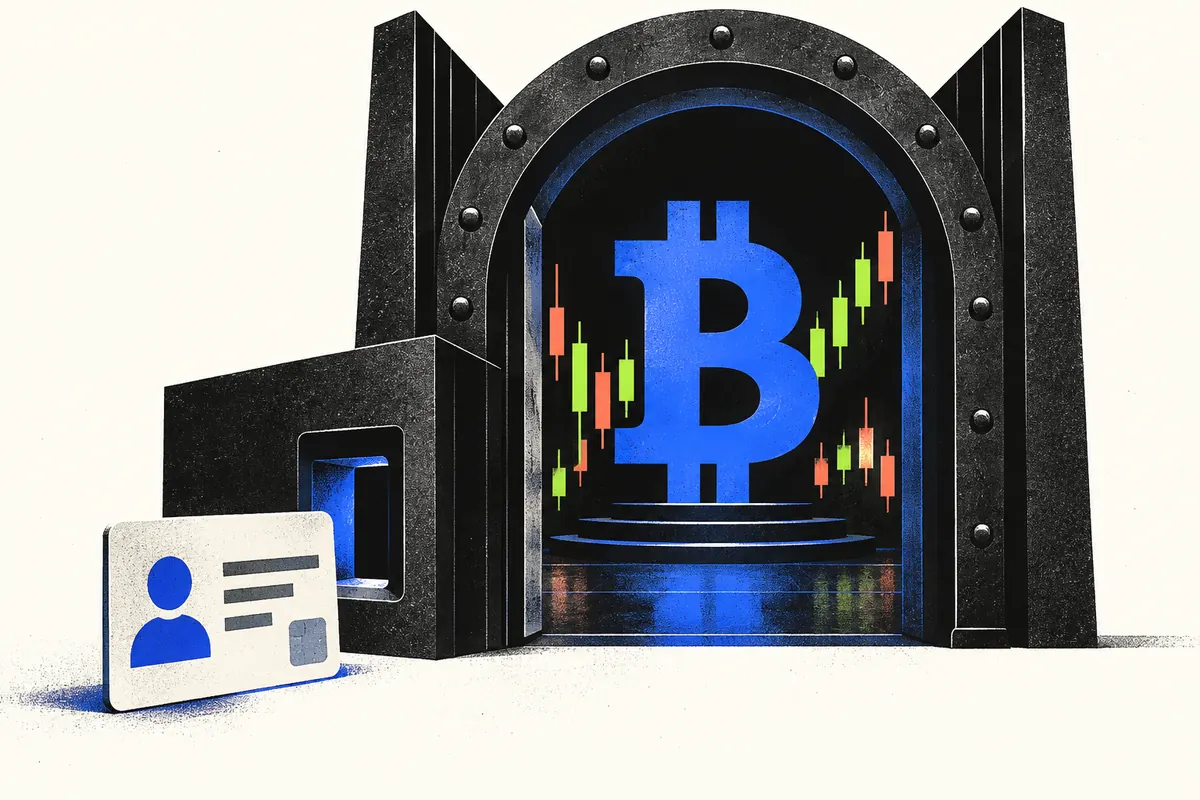
Living in Koror and owning an ID overseas are different cases
A person with a home in Koror should apply using that real residence and the documents accepted for the account. Someone living in a restricted country with a Palau digital ID should use the rules for where they actually live. Bybit’s country policy explicitly allows action against accounts that misrepresent their location, including closure and liquidation of positions.
A digital identity card and evidence of where you live answer different questions. RNS identifies the card as identification rather than citizenship and directs holders to respect the rules of their current residence. Buying the card does not establish a move to Palau or a right to the futures products offered to physical residents.
Can we confirm acceptance of the card by every shortlisted exchange?
No current universal acceptance rule was established for all the shortlisted platforms. The stronger verified conclusion is narrower: Bybit has expressly served verified Palau residents in a derivatives-related campaign, while the digital ID programme concerns identification. These are two separate pieces of evidence, and neither should be stretched into a promise that an overseas cardholder qualifies for that account.
If you already have a national passport and live in Palau, buying a digital ID solely to open an exchange account may add expense without solving a real requirement. Choose the exchange on the documents it accepts from you and the products it enables, rather than treating the ID as a trading subscription.
Why some MEXC futures can be missing in Palau
MEXC names Palau in the restricted regions for its Futures Innovation Zone. Users covered by that restriction cannot open positions in those pairs. This is more specific than the platform’s general account-country list and explains why an account can appear usable while a newly advertised contract is unavailable.
The restriction should not be exaggerated into a claim that every MEXC futures contract is blocked in Palau. The announcement separates the Innovation Zone from the Main Board, and says a project can move between them after review. Conversely, general MEXC eligibility should not erase the explicit Innovation Zone limitation.
For a trader whose main aim is newly listed, very small-cap perpetuals, that product restriction can change the exchange choice more than a headline maker fee. For someone trading an eligible ordinary BTC market, it is a narrower limitation. Our directory keeps MEXC visible and attaches the product notice so the distinction also survives in the site’s tools.
What will a Palau futures trade cost in US dollars?
Bybit’s published non-VIP perpetual and futures schedule lists 0.02% maker and 0.055% taker, with regional and account variations. On an unchanged 2,000 USDT position, a taker entry and taker exit total 2.20 USDT. A maker entry followed by a taker exit totals 1.50 USDT. These are commission examples, excluding funding, conversion, spread and withdrawal charges.
For a Palau resident budgeting in USD, the dollar-linked unit makes the arithmetic familiar, but USDT is still not a bank dollar. The final amount reaching a bank can differ because the exit requires a supported conversion or cash withdrawal. A headline commission comparison is most useful for an already funded account, not as a complete estimate of getting money into and out of Palau.
Funding applies to perpetuals and varies by market. Bybit’s documentation separately explains fees for expiring contracts and automatic settlement. If you only intend to trade perpetuals, do not accidentally cost the account using the fee section for an inverse expiry product. Match the contract family to the price you are comparing.
The same discipline applies to “zero fees” banners. A temporary spot or traditional-asset promotion does not necessarily cover crypto perpetuals. Record the actual fee rate shown for the verified account and pair before comparing the two exchanges’ published schedules.
Can you fund the account from a Palau bank?
Bybit’s bank-card support list includes Palau. That establishes a supported card-purchase jurisdiction on the exchange side, not a guarantee that every local issuer approves the purchase. It also says nothing by itself about an international bank wire or a free USD cash-out method.
Kraken publishes its cash withdrawal methods separately from derivatives eligibility. Match the withdrawal provider, supported residence and bank destination before treating an international USD transfer as available. A Palau postal address using a US-style ZIP code does not turn the customer into a US resident or establish eligibility for a domestic US ACH method.
The IMF’s January 2026 Palau review describes the local payments environment and constraints facing digital-payment projects. An account at a familiar bank or a remittance service is not evidence of an exchange integration. Keep the exchange’s beneficiary instructions separate from ordinary person-to-person remittances; the intended recipient and the permitted purpose matter.
A practical comparison for an existing crypto holder is whether the exchange accepts the asset on the network already used. A practical comparison for a cash-funded newcomer is whether the complete purchase and withdrawal route works with their bank. These are distinct starting positions; the futures ranking does not mean both readers have the same funding costs.
Can Palau Stablecoin be used as futures margin?
The government’s stablecoin project concerns domestic payments. Its existence does not mean that PSC is accepted as collateral by Bybit, Kraken or a perpetual DEX. The reviewed exchange product documents did not establish PSC as usable futures margin, so this guide does not offer it as a substitute for an exchange-supported settlement asset.
Palau’s official programme page publishes pilot reports, an audit and a draft payment-system bill. The IMF’s January 2026 assessment describes the tokenized-dollar project as dependent on further legal, regulatory and custodial arrangements. Those documents should not be presented as proof that a fully launched retail futures-funding system exists today.
The distinction is straightforward: a token designed for local purchases needs a specific exchange listing, accepted network and collateral policy before it can fund a leveraged position. A USD peg alone does not provide any of those. Similarly, using the XRP Ledger for a payments project does not imply that XRP or every token on that network is accepted by the futures venue.
Local regulation and the tax claims surrounding digital residency
No local derivatives authorisation for the shortlisted international exchanges was verified in the official Palau material reviewed. The digital-residency programme and the stablecoin pilot should therefore be kept separate from exchange licensing. They demonstrate digital-finance initiatives, not government approval of an individual leveraged trading account.
Palau’s tax administration also gives a more precise picture than a blanket “zero-tax crypto residency” slogan. Business Profits Tax applies to businesses registered for PGST and is assessed at 12% of net income. PGST is a separate 10% consumption tax. These are different taxes with different bases; neither rate should simply be applied to the face value of every personal futures order.
For a digital ID holder living overseas, the first relevant tax system is not automatically Palau’s. RNS itself tells users to respect obligations in their current country of residence. Someone cannot conclude that futures income is untaxed merely because the identity card was issued in Palau or the exchange account holds USDT.
For a person trading as a business in Palau, the useful records are the realised results, trading expenses, funding receipts or payments and movements of their own capital. No Palau-specific published ruling resolving every personal perpetual-futures scenario was located. We therefore do not invent a universal personal rate or claim that all losses are deductible against unrelated income.
Koror, Babeldaob and Palauans living overseas
The exchange policies reviewed do not establish separate leverage bands for Koror and Babeldaob. Geography within Palau can affect practical access to banking, but it does not justify inventing a different crypto-futures licence or maximum multiplier for each state. The relevant country record remains Palau unless the person has genuinely moved elsewhere.
A Palauan who moves to the United States faces a materially different exchange decision. Bybit excludes US users, and Kraken’s international derivatives eligibility is separate from its US product offering. Citizenship under the Compact relationship is not a passport to use the same offshore perpetual account from any location.
A foreign national living in Palau should likewise disclose both the real residential details and any nationality information the exchange requests. The point is to classify the account correctly at the start, when changing a product choice is easier than resolving a blocked account with an open leveraged position.