












Which exchange should a Moldova resident consider first?
Bybit is worth checking first if you already have crypto obtained through a lawful, documented route and want a dedicated perpetual-futures account. Moldova is not named in its current general excluded-country list. The important limitation is funding: the provider separately lists Moldova as restricted for its EUR SEPA and USD SWIFT methods. This is a crypto-trading recommendation with a specific payment constraint, not a promise that a Moldovan bank transfer will work.
OKX is a second candidate for its international crypto derivatives service, subject to the verified account's eligibility. Its general terms do not list Moldova among the named restricted locations. However, the published OKX euro SEPA method requires EEA residence. Moldova's participation in the SEPA payment network does not meet that separate condition. Someone choosing between these exchanges from Chișinău needs that answer before comparing welcome bonuses.
| Candidate | What the public evidence supports | Main Moldova limitation |
|---|---|---|
| Bybit global account | Moldova is absent from the named general exclusion list; crypto futures are offered subject to approval | Moldova appears in the EUR SEPA and USD SWIFT restrictions |
| OKX international account | Moldova is not named in the reviewed general restricted-location list | The advertised European SEPA deposit service requires EEA residence |
| A local crypto-service business | A domestic address alone proves neither permission nor a usable futures market | The existing local restrictions and new-law transition must be respected |
| An EU spot exchange | May offer a way to hold or buy coins if it accepts the customer | Coin access alone does not establish futures access or a permitted funding route |
We prefer Bybit here for the reader who can satisfy the account and funding conditions, rather than steering a crypto-futures search towards an unrelated traditional broker. But the recommendation is not evidence of a Moldovan licence. If you are starting entirely with lei in a local bank, resolve the lawful purchase and eventual withdrawal path first. A higher advertised leverage ceiling cannot fix a payment route that does not accept your residence.
Is Moldova's new crypto law already in force?
Moldova has adopted a new Cryptoassets Market Law, but the adoption date should not be confused with the date a new provider regime becomes usable. The Finance Ministry identifies Law 180/2026 as adopted, and the Official Gazette records its publication on 17 September 2026. Contabilitate's summary of the published law gives 17 March 2027 as the commencement date, six months after publication. This review is dated 1 October 2026, during that interval.
The practical consequence is that a news headline about Moldova opening its crypto market does not establish that a particular exchange is already authorised locally. Nor does alignment with an EU-style framework make Moldova an EEA country. A customer still needs the current account agreement, current local funding rules and the service actually offered today. We would not use the new law to erase restrictions from the table above before they change.
CNPF's explanation of the existing rules distinguishes the prohibition on providing virtual-asset services on Moldovan territory from residents' transactions with providers authorised abroad. The latter are subject to a banking limit described below. That is more precise than either “crypto is completely banned for Moldovans” or “every foreign exchange is legal because it has a website”. Both shortcuts lose the distinction that matters to a real user.
A local-language sales agent should therefore be able to identify the company offering the account and the permission it relies on. An intermediary collecting lei in Moldova is not made legitimate by pointing at a foreign exchange's brand. If its service is different from opening your own account directly with the named foreign provider, assess that intermediary separately. The new law is not a reason to accept an unexplained local cash arrangement.
What does the MDL 50,000 monthly limit actually restrict?
CNPF's public explanation states that financial institutions must not admit residents' transactions to authorised foreign virtual-asset providers above a cumulative MDL 50,000 per month. This is a rule affecting the payment relationship. It is not an exchange leverage setting and should not be presented as the maximum face value of a futures position.
A transfer plan illustrates the distinction. If someone has already sent MDL 30,000 in relevant payments during the month, a further MDL 25,000 would take that total to MDL 55,000. A platform allowing a larger deposit does not remove the Moldovan restriction. The illustration assumes those payments fall within the same covered category; the bank must confirm the applicable treatment, including how it counts incoming and outgoing flows under the current rules.

Do not divide a payment between cards, relatives or intermediaries to evade a cumulative restriction. Apart from the compliance problem, that would make the ownership record harder to explain when you want the money back. The useful question for the bank is whether it can process the proposed payment to the named authorised provider, with the amount and purpose disclosed accurately.
For somebody who already holds crypto, this section does not establish a separate permission to ignore local rules. It explains why an exchange's deposit page and a Moldovan bank's decision can give different answers. Keep the original acquisition record and ask about the return route before building a large balance. A platform's ability to receive coins does not guarantee that a bank will later accept the proceeds without examining their origin.
SEPA reached Moldova. Why can an exchange still reject it?
The National Bank confirms that Moldova became operational in SEPA on 6 October 2025. That is a real improvement in euro payments, not merely an announcement about future access. It can make an eligible cross-border euro transfer simpler and cheaper. But SEPA membership concerns payment infrastructure; it does not change the customer-residence rules of a crypto platform.
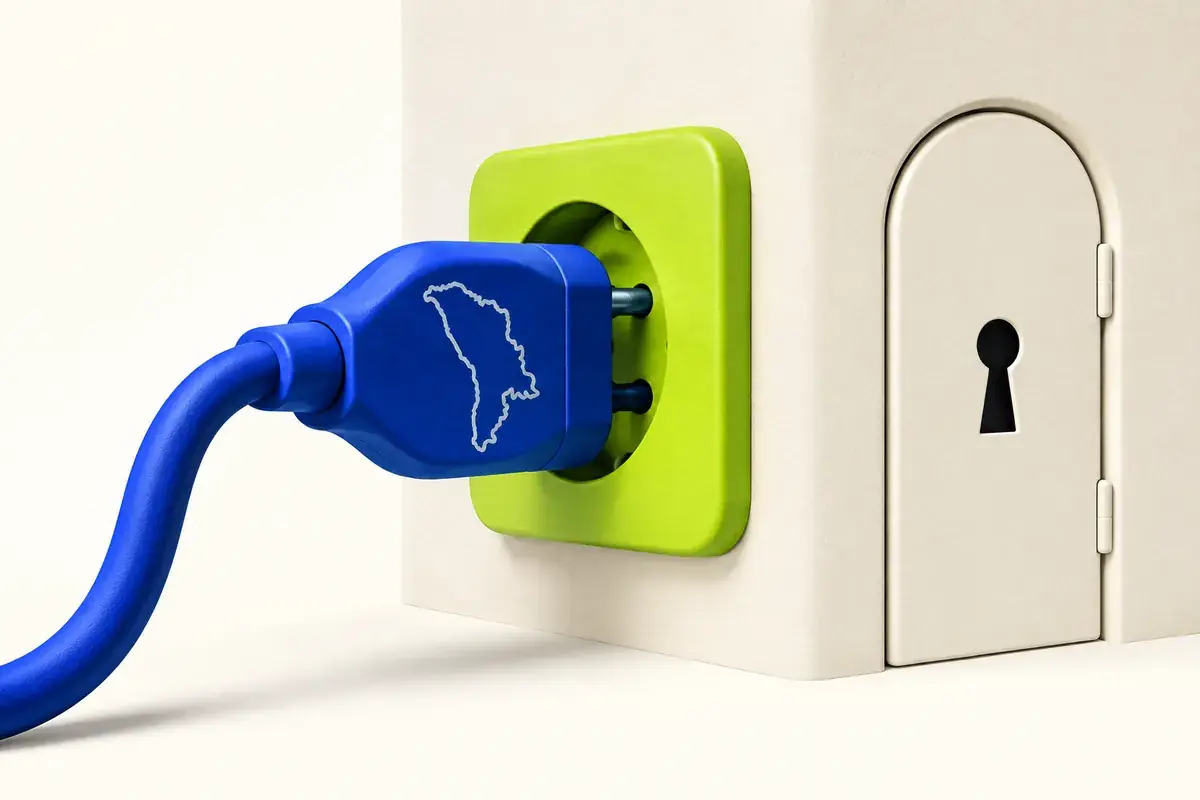
Bybit provides a concrete example of the gap. Its September 2026 fiat restriction table includes Moldova for EUR SEPA and USD SWIFT. The same country is absent from its general list of excluded service jurisdictions. Reading only one of those pages would produce a misleading answer. A Moldovan user can be a plausible customer for a crypto account while still being unable to use those particular cash rails.
OKX reaches a similar practical result by another rule: its published local EUR transfer method is offered to EEA residents. A Moldovan bank joining SEPA does not turn a Moldova-resident customer's OKX account into an EEA account. Even a euro balance and a correctly formatted IBAN do not establish entitlement to that method. The account's real residence is decisive for this specific service.
This does not mean Moldova's SEPA connection is irrelevant to crypto. It means the recipient must actually offer that payment method to you and the transaction must satisfy local rules. Before comparing transfer prices, establish those two facts. Otherwise a low advertised bank fee describes a payment you cannot complete to the chosen trading service. Use the live beneficiary and method shown in your approved account, not details copied from an EEA guide.
What does a Moldovan euro transfer really cost?
maib's current personal SEPA schedule is a useful local benchmark. It lists €0.25 for transfers up to €200, €3 for €200.01–€999.99, €5 for €1,000–€9,999.99 and €8 from €10,000. Its separate offer makes the first monthly payment of up to €50 free through 31 December 2026. Those are bank-transfer prices, not evidence that a particular exchange recipient is accepted.
For an eligible €500 transfer, the listed €3 bank fee is 0.6% of the amount. For €1,000, the €5 fee is 0.5%. If the money starts in MDL, add the actual lei-to-euro conversion cost. We do not use a fixed MDL/EUR quote because the executable bank rate can change. A comparison that shows only the exchange's trading commission would leave out the part a Moldovan salary earner encounters first.
If you receive income in euros, the calculation may look different from that of someone paid in lei. There may be no initial MDL conversion, but the deposit method still has to accept the account and the eventual withdrawal must have a usable destination. The currency already held changes the cost; it does not change the exchange's country restriction. This is why a single “cheapest exchange in Moldova” label can conceal a substantial difference between readers.
A zero-fee P2P advertisement is not automatically a cheaper or compliant alternative. Its quoted coin price can include a spread, and the counterparty is different from a direct exchange bank deposit. We do not recommend using a personal transfer description to disguise the purpose of a crypto purchase. Compare only methods that the bank and platform permit for the actual transaction, with a record that explains who paid whom and what was received.
How much leverage can a Moldovan futures account offer?
Bybit's August 2026 adjustment raised the published maximum on selected BTCUSDT and ETHUSDT perpetuals from 100x to 150x. It also changed limits on certain other markets. This is a provider announcement about named contracts, not a Moldovan regulatory allowance and not a guarantee that a newly opened account receives that setting. Account approval, market risk tiers and the actual position size can reduce the available limit.
That distinction lets us give a concrete answer without importing an irrelevant European maximum. Moldova is outside the EEA, so an eligible international account is not automatically the same product discussed in our Malta or Luxembourg pages. However, a Moldovan passport holder genuinely living in an EEA country may be served under that country's regional rules. The reader's current residence matters more than the language used in the app.
For a BTC or ETH trader who already has a suitable crypto funding route, this makes Bybit a relevant candidate. For someone whose intended altcoin is absent from their approved account, it is not a reason to select a different coin just to follow our first recommendation. Compare the actual contract with the international OKX offering available to your account. Do not assume that a long global list of spot tokens is a matching list of leveraged markets.
The published Bybit standard perpetual/futures execution rates are 0.02% maker and 0.055% taker, before account-specific tiers and other costs. Funding and any conversion or withdrawal charge are separate. A lower commission elsewhere may matter to frequent traders, but for Moldova the usable cash-out route can outweigh a small difference in execution fees. A profitable exchange balance that cannot be documented to the receiving bank is not equivalent to money ready to spend locally.
How are crypto profits reported in Moldova?
The Moldovan State Tax Service has a specific answer for an individual's cryptocurrency disposal outside a business activity. It treats the coin as a capital asset and describes taxable inclusion of 50% of the recognised net capital gain, with a 12% personal income-tax rate. That produces a 6% arithmetic effect in a simple qualifying case. It is not a universal 6% rate for every crypto-related payment or trading business.
The scope matters for this site: that SFS answer concerns disposing of cryptocurrency. It does not explicitly classify every cash-settled perpetual future. Keep derivatives results separate from coin disposals and establish the appropriate treatment for the actual contract and activity. An offshore trading account does not, by itself, remove a Moldovan resident's obligation to consider foreign investment or financial income.
Why acquisition documents matter so much
SFS states that, without documents supporting a capital asset's cost, its cost basis is zero. It also identifies CET18 and the 30 April deadline in its explanation. For a qualifying coin example, suppose documented proceeds are MDL 40,000 and documented acquisition cost is MDL 30,000. A MDL 10,000 gain gives MDL 5,000 of taxable inclusion and MDL 600 of tax at 12%, before any other applicable adjustments.
That illustration should not be copied onto a futures ledger. It shows why saving evidence of the original crypto purchase can matter as much as saving the final sale. A derivative account may then have its own realised result and fees, while the collateral may undergo separate acquisitions or disposals. Treating the last bank withdrawal as the whole profit would merge these events and can count original capital as income.
For someone who acquires coins with euros but reports in Moldova, retain the original currencies and dates as well as the MDL reporting calculation. An exchange's USD profit total is not automatically the MDL amount for the return. If a tax preparer is involved, provide the trade export and the contract description together. That is enough to ask a specific classification question without reconstructing the year from screenshots or messages with sellers.
Romanian passports, diaspora and regional addresses
A Moldovan citizen established in Romania uses the service offered to Romanian residents; a Romanian citizen living in Chișinău uses the Moldova conditions. Moving to an EEA address can therefore change the Bybit or OKX entity and available contracts. The regional comparison below deals separately with Gagauzia and Transnistria.
For diaspora payments, an exchange withdrawal normally needs an accepted account belonging to the customer. Sending support to a relative in Moldova is a separate bank transfer; the relative’s card should not be assumed to be an eligible withdrawal destination for the trader’s account.
Can residents of Gagauzia and Transnistria use Bybit or OKX?
Neither Gagauzia nor Transnistria is separately named in the Bybit service exclusions or the OKX restricted-location disclosure reviewed for this update. Moldova itself is not excluded by those general lists. That makes both exchanges candidates for eligible residents, rather than grounds for declaring either region crypto-free. It does not amount to a promise that either company approves every locally issued document.
Gagauzia: the Moldovan account rules apply
Gagauzia is an autonomous territorial unit within Moldova under Law 344/1994. Its autonomy does not make a resident of Comrat a customer living in a different sovereign country. An applicant using Moldovan government documents and a real Gagauz address should therefore be assessed against the Moldova conditions discussed here. We found no published Bybit or OKX rule imposing a separate Gagauzia leverage cap or a region-wide exclusion.
Our choice remains Bybit for an approved customer with a permitted crypto funding method; OKX is the alternative. The important catch is the same concrete one faced in Chișinău: Bybit's named EUR SEPA and USD SWIFT methods exclude Moldova, while OKX's published SEPA service requires EEA residence. Autonomy does not remove those payment restrictions, and speaking Russian does not make the account a Russia-resident account.
Transnistria: national identity documents are the useful distinction
A person living in Tiraspol or Bender may hold a valid Moldovan passport or identity card. This is not a hypothetical workaround: Moldova's government reports substantial numbers of Transnistrian residents holding both kinds of Moldovan document. Such a resident has a materially stronger onboarding basis than someone relying only on documents issued by the de facto regional authorities. The residence entered must still be the real Transnistrian address, not an invented address elsewhere in Moldova.
Bybit requires identity verification and recognises specified government-issued documents. OKX's current verification guide likewise requires an original valid government-issued document, with the accepted types determined by the nationality and residence entered. Neither reviewed guide specifically confirms acceptance of a Transnistrian-issued passport or regional identity card. We therefore do not recommend depositing on the assumption that such a document alone will unlock either exchange.
If the reader has only a regional document, the concrete official starting point is Moldova's Public Services Agency identity-document service, linked below. Whether the person qualifies for a Moldovan document depends on their legal status; obtaining one does not guarantee exchange approval. But it addresses the actual identity-document gap. Buying a verified account, using another person's passport or selecting a false country would leave that gap unresolved and put withdrawals at risk.
| Resident situation | Bybit and OKX finding | Useful conclusion |
|---|---|---|
| Gagauzia, valid Moldovan ID and verifiable local address | No separate region-wide exclusion found | Apply under Moldova; the national funding restrictions still matter |
| Transnistria, valid Moldovan passport and matching address evidence | No separately named territorial ban; normal identity review remains | Potential access, subject to acceptance of the actual documents and address |
| Transnistria, only documents from de facto local authorities | Acceptance of those documents is not confirmed in the reviewed policies | Do not describe the account as ready to fund; establish supported national identification first |
| A listed individual or a payment involving a designated party | Sanctions screening applies independently of the regional address | A different passport or exchange does not cancel a sanctions restriction |
Proving the address and getting money back
Identity and residential address are separate checks. OKX's international proof-of-address guidance accepts, among other options, recent bank statements or utility bills showing the customer's legal name and current address; mobile phone bills are excluded. Its normal freshness requirement for those statements is three months. Bybit also lists recent bank, utility and recognised government address records. An address document must identify where the customer actually lives, even when the passport was issued elsewhere.
This does not prove that every statement from every institution in Transnistria will pass review. The issuer and document still have to be verifiable. A reader who has a Moldovan passport but no acceptable record of their actual residence has resolved only one of the two checks. That is the remaining limitation, rather than an unexplained recommendation to look for a different exchange.
For withdrawals, distinguish an account at a bank licensed by the National Bank of Moldova from a locally branded payment account operating under a different framework. The NBM's public bank register provides the actual licensed names. Moldova joining SEPA does not establish that every institution serving Transnistria is a participant, nor does it override the exchange-specific exclusions above. A card displaying a familiar currency or network logo is not sufficient evidence of a supported euro withdrawal.
The EU's Moldova measures target designated people and entities, not everyone living in Gagauzia or Transnistria. Regional residence alone is therefore not evidence of an EU sanctions prohibition. The usable answer is specific: there is no separately published regional ban in the two reviewed exchange lists; national identity documents and verifiable residence can support an application; unsupported regional documents and restricted payment methods remain real obstacles. We have verified those policies, not opened funded accounts using regional residents' identities.